Industry
Automotive
Client
Mercedes Benz AG
Mercedes-Benz Sales Transaction System
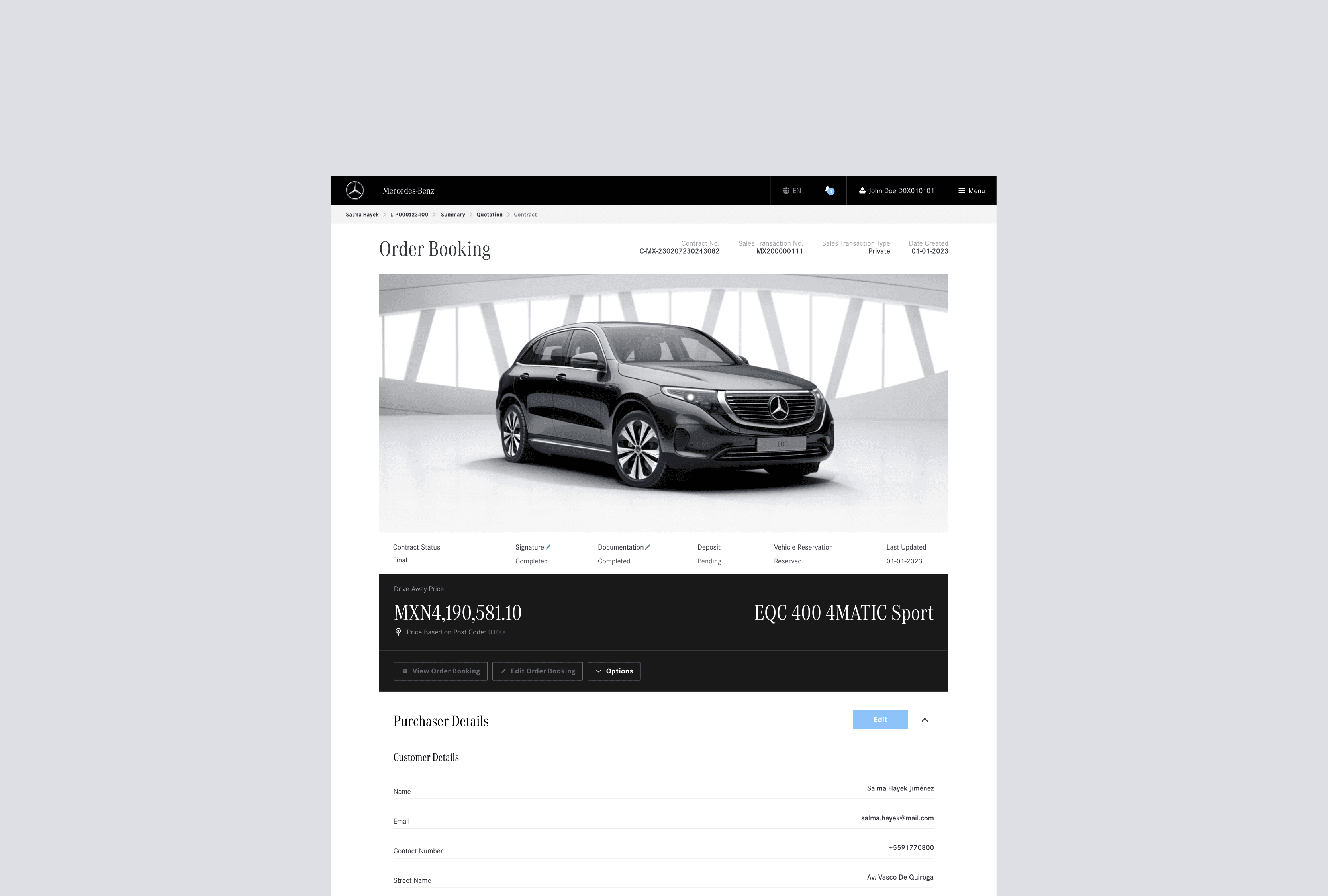
Making vehicle reservations less manual
The Mercedes-Benz Sales Transaction System (STS) is an internal platform used by Mercedes-Benz agents to manage vehicle reservations and sales.
The system connects the vehicle reservation process with Mercedes-Benz’s e-commerce experience, so agents can manage transactions in one place instead of relying on multiple manual steps.
I worked as part of the product team alongside product owners, managers, designers and developers. My role focused mainly on UX, interaction design and improving the experience based on the needs of both the agents and the business.
The challenge
Buying a car involves quite a few moving parts.
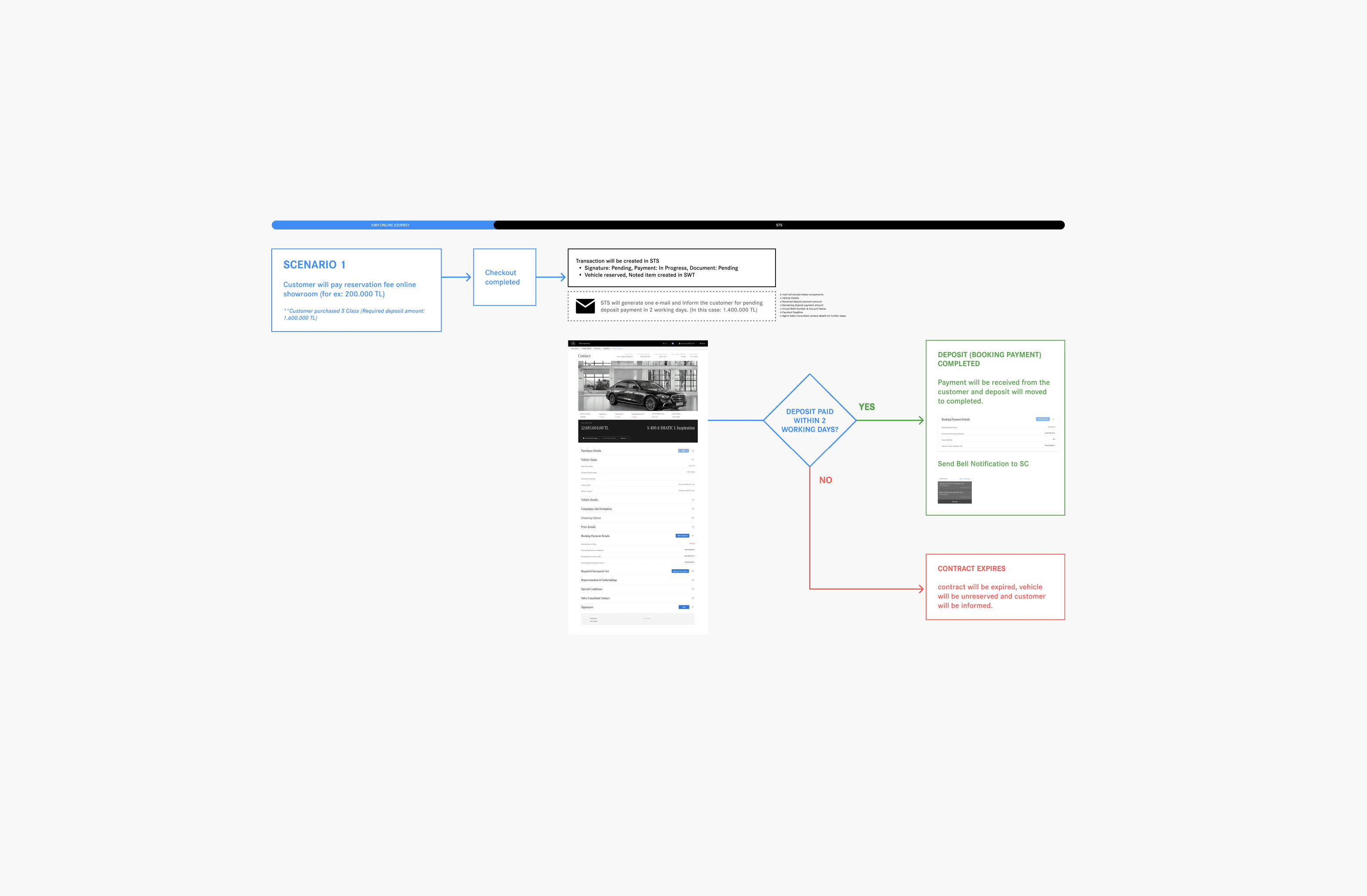
Agents need to check vehicle availability, manage reservations, handle customer details and complete the transaction while making sure the information is accurate.
The process was also different across markets. Countries such as Malaysia, Thailand, Turkey and Mexico had their own requirements and ways of working, so we could not simply design one solution and roll it out everywhere.
My job was to understand where the experience could be simplified while still accounting for these differences.
Designing for different markets
One of the interesting parts of working on STS was that the same product was used across different markets.
Each market had its own requirements and ways of working.
Rather than treating these as completely separate products, I worked with the product owners and managers to understand what needed to change and what could remain consistent.
This meant looking at the experience from two sides.
What does the agent need to get their job done?
What does the business need the system to support?
A lot of the design work was about finding the middle ground between the two.
Improving the experience
During sprints, I worked with the product owners and managers to refine existing flows and design new improvements.
Some of the work involved reducing manual steps in the reservation and transaction process, making information easier to understand and helping agents complete their tasks with fewer opportunities for mistakes.
The goal was not to add more features. It was to make the existing process feel simpler.
Moving from Sketch to Figma
When I joined the project, the team was still working mainly in Sketch.
I helped move the project over to Figma and updated the existing design files and project blueprints along the way.
This was not just a tool change.
Having the designs in Figma made it much easier for the product owners, managers, designers and developers to work from the same files and see what was happening.
I also helped the wider team adopt Figma as the main source of truth for the product.
It made collaboration much more transparent, especially when designs were being reviewed or changed during a sprint.
Working with the product team
STS was a good example of the kind of work I enjoy. Design was not something that happened separately from the rest of the product.
I worked closely with product owners, managers and developers throughout the process.
That meant discussing requirements, questioning existing flows, making design decisions based on different market needs and refining the work as the product evolved.
Not every problem needed a brand new screen.
Sometimes it was simply about making an existing interaction clearer or removing a step that did not need to be there.
The result
The improvements helped make the vehicle reservation and transaction processes more streamlined and reduced the amount of manual work required from agents.
The system also helped reduce errors around vehicle stock and reservations, which was important when dealing with transactions across different markets.
Moving the project to Figma also gave everyone a clearer place to work from and made collaboration between design, product and development much easier.
What I took away
Working on STS taught me that good product design is not always about creating something new.
Sometimes it is about understanding a complicated process, figuring out where people are getting stuck and making it a little easier. Especially when you are designing a product that needs to work for different people, different teams and different countries.